
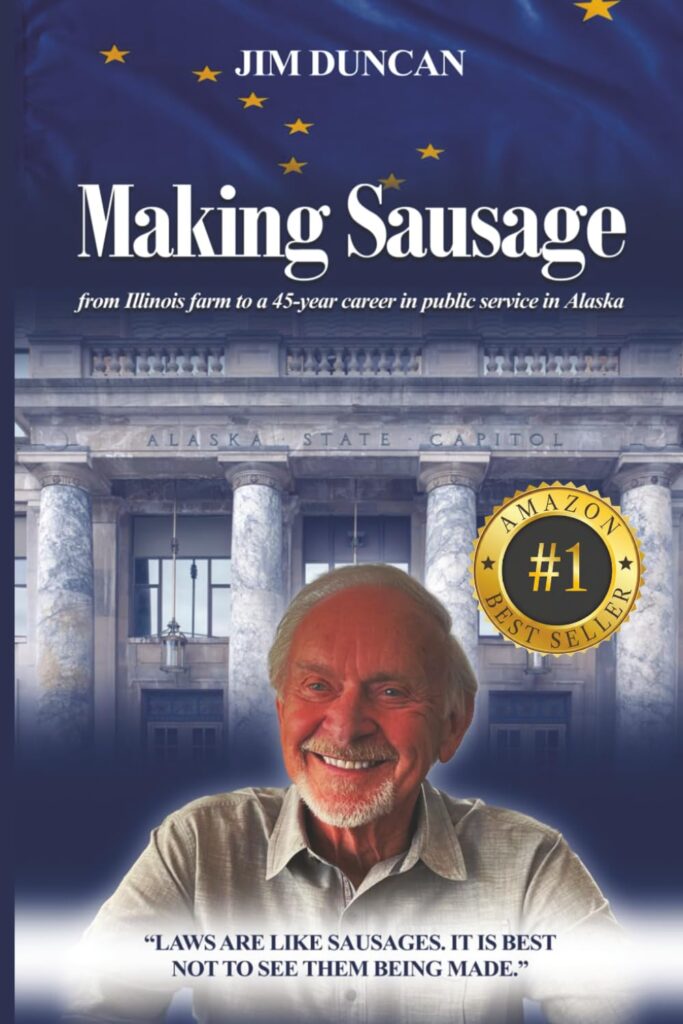
Before Jim Duncan spent decades serving the people of Alaska, his story began on an Illinois farm. In Making Sausage: From Illinois Farm to a 45-Year Career in Public Service in Alaska, he reflects on the years that shaped his character long before he entered public office. Rather than presenting those early experiences as distant memories, he explains how the lessons learned on the farm remained with him throughout his life.
Growing up on an Illinois farm was not simply about raising crops and caring for animals. It was about learning responsibility, keeping commitments, helping others, and understanding that meaningful work often requires patience and perseverance. These values became the foundation of Jim Duncan’s life and later influenced the way he approached public service.
Learning the Value of Hard Work
Jim Duncan describes farm life as a family effort where everyone had responsibilities. There were no days off from caring for the animals or maintaining the farm. Whether the weather was warm or cold, the work still had to be done.
From an early age, he milked cows by hand, fed livestock, carried water, operated farm equipment, and helped with seasonal work. These daily responsibilities taught him that excuses could not replace action. If something needed to be done, the family worked together until the job was finished.
Looking back, Duncan explains that these experiences prepared him for the challenges he would later face in public service. The discipline he developed on the Illinois farm stayed with him throughout his career.
Every Job Matters
One lesson that stands out in the book comes from helping his father with the annual work of preparing pigs for market. Duncan admits that it was not a task he enjoyed, but his father explained that every person had an important role, no matter how small it seemed.
That experience taught him something he carried into adulthood: success depends on everyone doing their part. Whether working on a farm or serving in government, each responsibility contributes to a larger goal.
This simple lesson became one of the many ways the Illinois farm influenced how Jim Duncan viewed teamwork and responsibility.
Buy This book at Amazon
Helping People Without Judging Them
Another memorable experience involved the tomato harvest. Instead of hiring only traveling workers, Jim Duncan’s father often gave work to local men from Muscatine who had fallen on difficult times.
As a young boy, Duncan spent long days working alongside these men. At first, he misunderstood them, but as he listened to their conversations and watched how hard they worked, his opinion changed. He realized that people should not be judged by their circumstances.
This lesson remained with him throughout his career. In the book, Duncan explains that these experiences influenced how he viewed the responsibility of government to help people who needed assistance while treating them with dignity and respect.
Keeping Commitments
One story from high school became another lasting lesson.
While playing varsity football, Jim Duncan also belonged to the marching band. When both activities required him at the same time, his mother reminded him that he had already made a commitment to the band. Even though it meant marching in his football uniform, she believed keeping his word was more important than avoiding embarrassment.
That experience stayed with him throughout his life. It reinforced the importance of honoring commitments, a principle that later guided his work in public office.
The Foundation for Public Service
Jim Duncan makes it clear that the values guiding his career did not begin in the Alaska Legislature. They began much earlier on the family farm.
The Illinois farm taught him to work hard, accept responsibility, help others, respect commitments, and understand the importance of teamwork. As his career later expanded into education, local government, the Alaska Legislature, and union leadership, those same lessons continued to influence his decisions.
Rather than separating his childhood from his public service, Duncan presents them as one continuous journey. The experiences of farm life became the foundation upon which everything else was built.
Conclusion
Throughout Making Sausage, Jim Duncan returns to the idea that life’s early experiences shape future decisions. His years on an Illinois farm were filled with hard work, family responsibility, and valuable lessons that never left him.
By sharing these memories, Duncan shows readers that leadership often begins long before a person enters public office. For him, the principles learned while growing up on an Illinois farm became the same principles that guided a lifetime of public service in Alaska.